
Vanessa Rogier – Conservation Manager for The Trash Punx
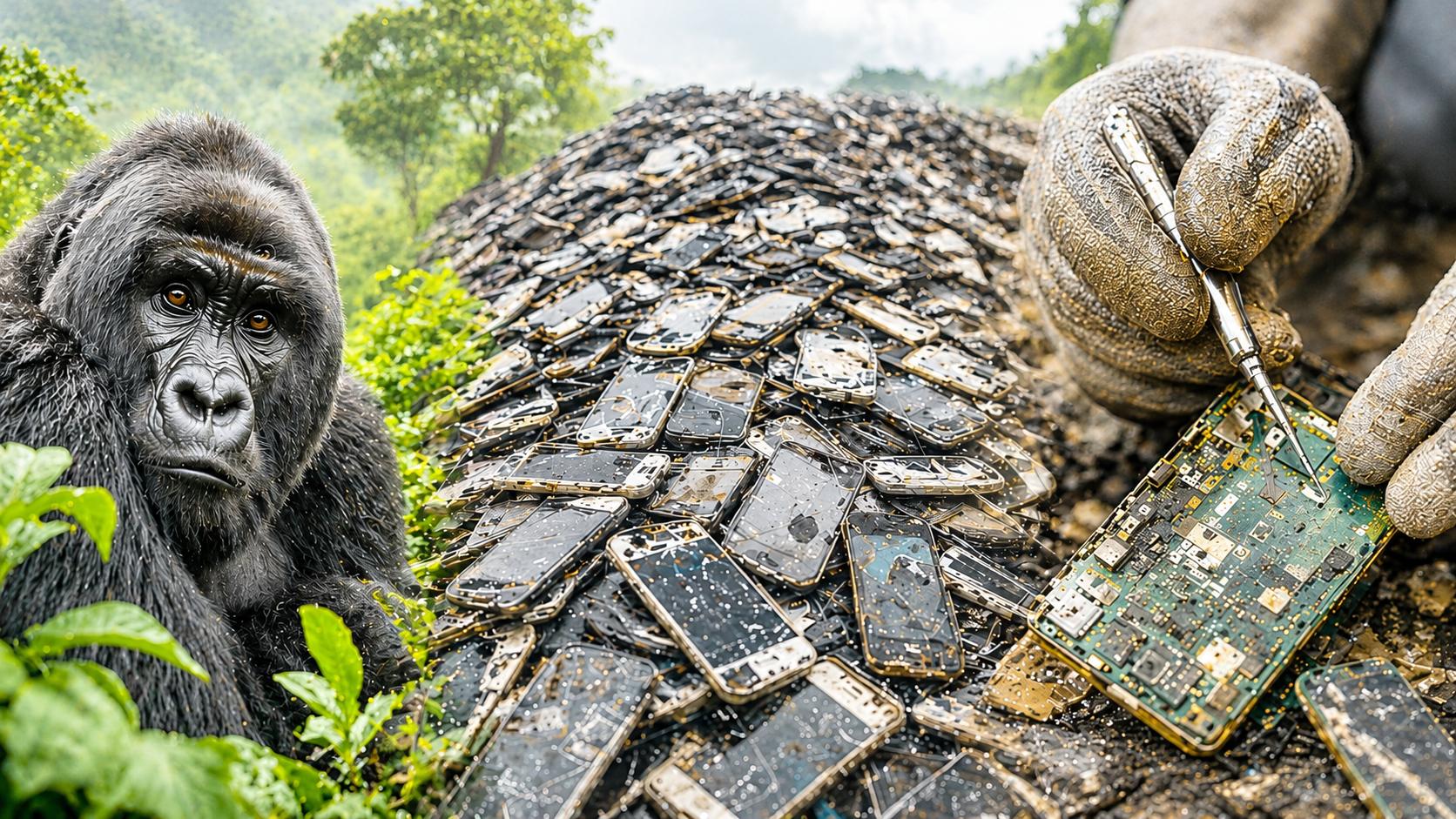
What If We Didn’t Have to Mine the Earth Anymore?
Rethinking Waste Through Urban Mining
I was in a conversation recently about electronic waste (e-waste) —how much wecreate, and how little of it we recover. At one point I mentioned something I had come across: that if we did a better job reclaiming the materials already sitting in our discarded electronics, we could reduce our need to keep mining the earth for those same resources.
That’s when someone pushed back. They said urban mining—the idea of recovering materials from waste—was dirtier than traditional mining. And I remember thinking . . . that doesn’t feel right. So, I dug deeper, wanting to understand the bigger picture.
What We Don’t See
Take the Democratic Republic of Congo (DRC).
It produces a large share of the world’s cobalt—an essential material in the rechargeable batteries that power our phones, laptops, and electric vehicles. It’s also an important source of minerals used across the electronics industry. That supply chain is complex—but parts of it are deeply challenging.
In some areas, mining is carried out under dangerous conditions, with limited protections for workers and little oversight. There are well-documented concerns around exploitative labor practices, including child labor, and communities working in environments that put both their health and safety at risk.
At the same time, these mining regions overlap with some of the most biologically rich ecosystems on Earth. Areas like Virunga National Park are home to endangered species such as the mountain gorilla, along with forest elephant and okapi—wildlife that depends on intact habitat to survive. So, when we talk about the materials that power our everyday lives, it’s worth remembering: they come from somewhere.
What Is Urban Mining?
Urban mining is the idea that the materials we need aren’t always somewhere else—they’re already here.
It’s about recovering valuable resources from:
Electronics
Buildings
Plastics
Infrastructure
Instead of extracting more, we start paying attention to what we’ve already used.
The Good, The Bad, and the Reality
Urban mining is part of a broader shift toward a
Circular Economy—keeping materials in use instead of constantly replacing them.
Done well, it can:
Reduce the need for new mining
Use less energy than extracting raw materials
Keep waste out of landfills and waterways
Create local solutions and jobs
But it’s not perfect. Without proper systems, recovering materials can be messy and even harmful. It requires infrastructure, design, and responsibility to do it right.
Why This Matters
For me, this isn’t theoretical. At The Trash Punx, this is what we see everyday—materials pulled from waterways, streets, and waste streams, and given another life. When plastic becomes something useful again. When discarded materials are seen as resources.
And when those materials can replace something that would otherwise be taken from nature—like turning recycled plastic into fence posts so communities don’t have to cut down saplings—that’s where the impact really starts to show.
The Shift
Urban mining isn’t perfect. But neither is the system it’s trying to replace. The difference is one depends on continued extraction. The other asks us to take responsibility for what we already have. And maybe that’s the real shift. Not just in how we manage materials—but in how we see them. Because the resources we need aren’t always somewhere else. Sometimes, they’re already in our hands.